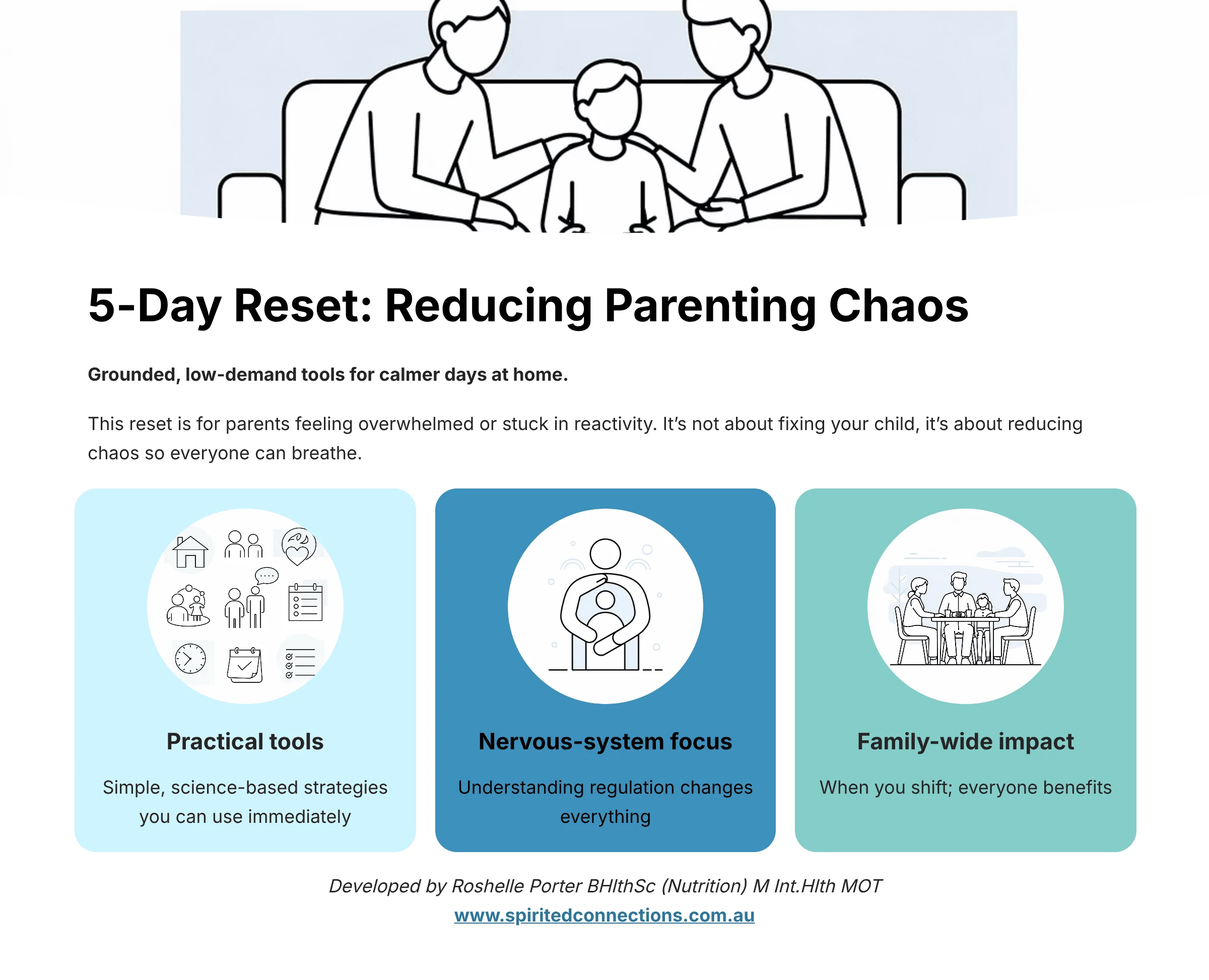
A practical guide helping parents move from daily overwhelm toward calmer family rhythms. Learn how to reduce hidden pressure in routines, support regulation before behaviour, and introduce small changes that ease conflict and improve daily life. Best for parents experiencing frequent power struggles, difficult transitions, or family burnout.
A follow-up resource helping parents understand behaviour through nervous system capacity rather than compliance. Parents learn how to adjust expectations, support regulation, and build sustainable rhythms that reduce stress and escalation at home. Ideal for families navigating emotional overwhelm, anxiety, or ongoing behavioural challenges.

A fillable Word Individual Learning Plan designed for students whose learning is impacted by demand avoidance, anxiety, and loss of autonomy. This template reframes demand avoidance as a protective response to pressure rather than refusal or non-compliance. The plan supports educators to reduce hidden pressure in the classroom while restoring student autonomy and access to learning.

An Autism-informed Individual Learning Plan designed to support students whose learning is influenced by sensory processing differences, anxiety, and regulation needs. This template helps schools create predictable, safe learning environments that support participation and strengths-based learning rather than behaviour compliance.

An ADHD-informed Individual Learning Plan designed to support students experiencing executive functioning differences, attention variability, and regulation challenges. The template supports educators to provide structure, clarity, and flexibility that helps students access learning without increasing pressure or frustration.

A nervous-system informed Individual Learning Plan designed for students whose learning is impacted by anxiety, overwhelm, or emotional dysregulation. The template supports educators to prioritise emotional safety and predictable environments so students can gradually increase participation in learning.
